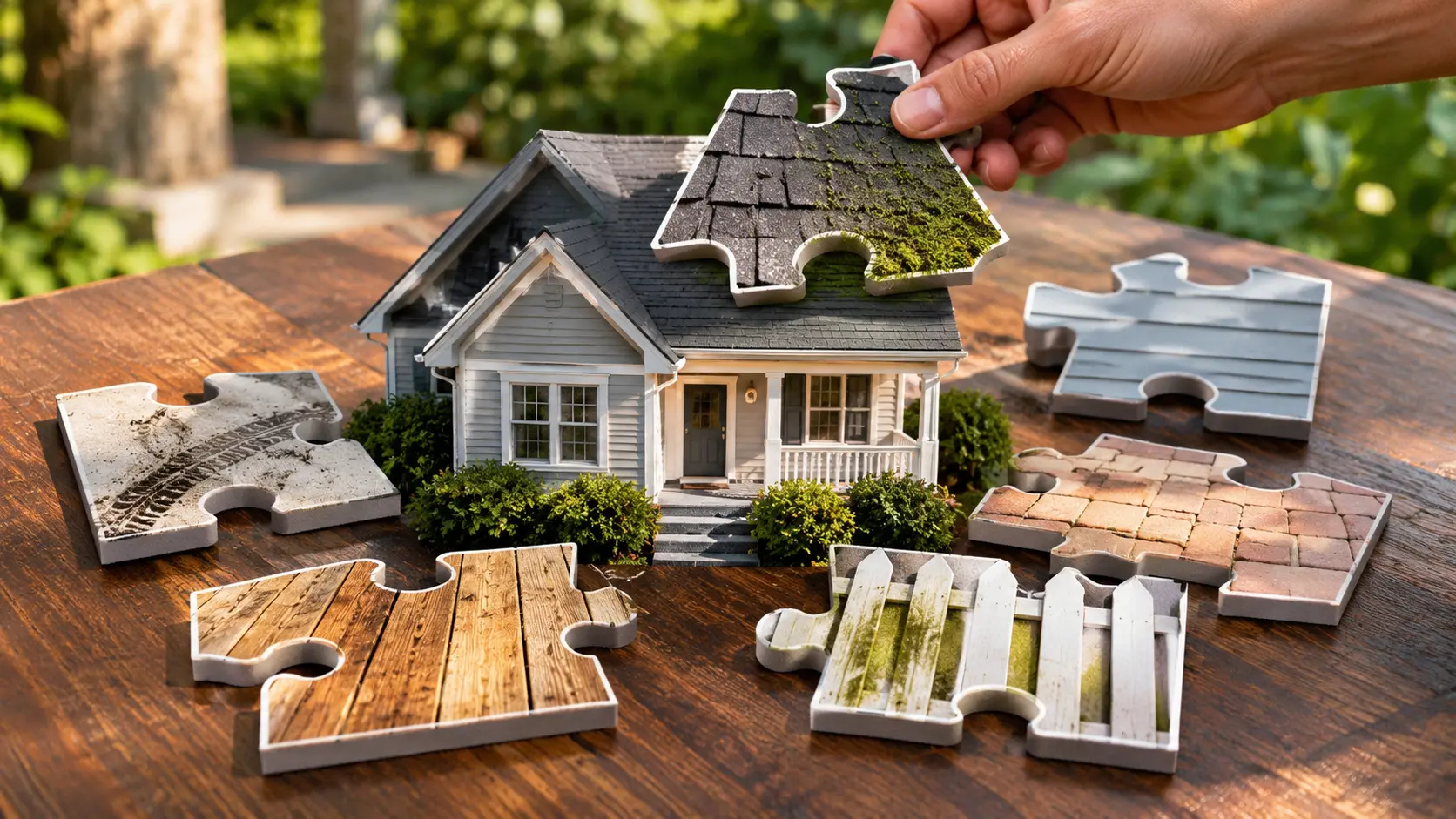
Exterior surfaces face different cleaning challenges. A driveway may develop tire marks and embedded grime, while siding collects pollen and algae. Wooden decks and fences have their own maintenance needs, particularly when moisture and weathering affect their appearance.
The main types of pressure washing services for homeowners include house washing, driveway and concrete cleaning, sidewalk cleaning, patio cleaning, deck cleaning, and fence cleaning. Some surfaces can tolerate conventional pressure washing, while others require gentler techniques.
Knowing what each service involves helps homeowners choose suitable exterior cleaning options without risking unnecessary damage to their property.
What Are the Main Types of Pressure Washing Services?
Residential exterior cleaning services are generally classified by the surfaces they address. Although homeowners often use pressure washing as a general term, professional cleaning may involve different methods depending on the material and the type of buildup.
The following table provides a quick overview.
| Exterior Surface | Cleaning Service | Common Cleaning Concerns |
| Siding and exterior walls | House washing | Pollen, dirt, algae, and mildew |
| Concrete driveways | Driveway and concrete cleaning | Tire marks, grime, and staining |
| Sidewalks and walkways | Sidewalk cleaning | Dirt and organic growth |
| Patios and outdoor living areas | Patio cleaning | Soil, algae, and weather-related buildup |
| Wooden and composite decks | Deck cleaning | Surface grime, algae, and discoloration |
| Wood, vinyl, and composite fences | Fence cleaning | Dirt, organic growth, and staining |
These categories describe the areas being cleaned. The cleaning method is selected separately based on surface conditions and treatment requirements.
Common Residential Pressure Washing Services Explained
Each service addresses specific maintenance concerns. Understanding these applications can help homeowners identify which parts of their property may benefit from professional cleaning.
House Washing for Siding and Exterior Walls
House washing removes suitable dirt and organic buildup from exterior walls, siding, and surrounding features such as trim and soffits.
Pollen, dust, mildew, and algae can accumulate on these areas, particularly where shade and moisture create favourable conditions for organic growth.
The appropriate cleaning process depends on the exterior material. Vinyl siding, painted surfaces, and stucco may require low-pressure cleaning with solutions suitable for their finishes.
Special care is also needed around window seals, vents, and areas where water could enter behind exterior materials.
House washing is primarily intended to address removable surface contamination. It does not repair deteriorated paint, damaged siding, or other underlying defects.
Driveway and Concrete Cleaning
Driveways are exposed to vehicle traffic, soil, organic growth, and occasional fluid spills. Over time, these conditions can leave noticeable staining across concrete surfaces.
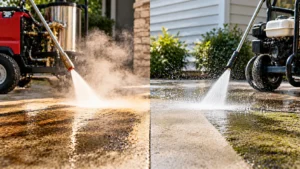
Driveway cleaning addresses accumulated grime and suitable stains using methods appropriate to the concrete’s condition. Professional equipment may include surface-cleaning attachments that provide more even coverage across larger areas.
Different stains require different treatments. General dirt and algae may respond to routine cleaning, while oil, rust, or deeply embedded discoloration may need specialized products or additional attention.
Concrete condition also matters. Older, weakened, decorative, or previously sealed surfaces may require a more cautious approach.
Homeowners dealing with persistent buildup can explore professional pressure washing services to understand the available cleaning options for exterior surfaces.
Sidewalk and Walkway Cleaning
Sidewalks and walkways collect dirt, fallen leaves, and organic material through regular outdoor exposure. Shaded sections may develop algae or other growth that becomes slippery when wet.
Cleaning these areas helps remove suitable buildup from frequently used pedestrian surfaces.
Walkway materials can vary, including concrete, brick, and natural stone. Loose joints, cracked sections, and deteriorating surfaces may affect the cleaning approach.
Removing organic deposits can address one source of slippery buildup, although it does not guarantee that a walkway will remain slip-resistant under all conditions.
Patio and Outdoor Surface Cleaning
Patios provide space for outdoor activities but are regularly exposed to soil, leaves, moisture, and weather-related staining.
Cleaning requirements depend on the patio material. Concrete patios may need a different treatment from brick pavers, natural stone, or sealed decorative surfaces.
Some paver installations contain jointing material that can be disturbed by excessive water pressure. Certain stone surfaces may also react poorly to unsuitable cleaning products.
A suitable patio cleaning process accounts for these characteristics while removing appropriate surface contamination.
For homeowners, the main consideration is identifying the patio material and any existing coatings before selecting a cleaning treatment.
Deck Cleaning
Decks made from wood or composite materials can develop dirt, algae, and other buildup from outdoor exposure.
Wooden decks require particular care because aggressive pressure can damage wood fibres, create visible marks, or affect existing stains and coatings.
Composite decking has different maintenance requirements. Cleaning products and techniques should follow the material manufacturer’s recommendations.
Deck cleaning can improve the appearance of surfaces affected by removable grime, but it cannot reverse structural deterioration, repair damaged boards, or restore every weathered finish.
When a deck has peeling coatings, weakened wood, or other visible damage, those conditions should be assessed before cleaning begins.
Fence Cleaning
Fences gradually collect dirt, algae, and weather-related deposits, particularly in areas exposed to moisture or surrounding vegetation.
The appropriate cleaning method depends on whether the fence is made from wood, vinyl, composite, or another material.
Wood fencing may require gentler treatment to avoid damaging the grain. Vinyl fencing can develop surface deposits that require appropriate cleaning solutions rather than simply increasing water pressure.
Painted or stained fences also need careful handling when their protective finishes have begun to deteriorate.
Fence cleaning is most effective when the treatment addresses removable buildup without unnecessarily affecting the underlying material.
Why Do Different Surfaces Need Different Cleaning Methods?
The cleaning service identifies the area being treated, while the cleaning method determines how buildup is removed.
Traditional pressure washing uses pressurized water and is commonly associated with durable exterior surfaces. Soft washing uses lower pressure with suitable cleaning solutions and is often appropriate for more delicate materials.
Hot-water pressure washing may be useful for certain grease and oil deposits, while cold-water cleaning is commonly used for general dirt and surface buildup.
No single method is appropriate for every material. Surface condition, existing coatings, and the type of contamination influence the safest effective approach.
For homeowners, understanding this distinction is more useful than comparing equipment power alone.
How Do You Choose the Right Pressure Washing Service?
The best starting point is the cleaning problem rather than the equipment a contractor uses.
Consider these three questions:
1. Which surface needs attention?
Identify whether the problem affects siding, concrete, wood, composite decking, fencing, or another exterior material. This helps narrow down the relevant service.
2. What type of buildup is present?
Ordinary dirt, algae, grease, oxidation, and permanent staining may require different treatments. Some discoloration cannot be fully removed through washing alone.
3. What result is realistically achievable?
Cleaning can remove many types of surface contamination, but it cannot repair structural defects or restore every deteriorated finish.
If the material is delicate, damaged, or unfamiliar, ask the cleaning provider how they will assess it and determine an appropriate treatment.
What Should Homeowners Know Before Scheduling Exterior Cleaning?
Before requesting a cleaning estimate, it helps to provide clear information about the property and the work required.
- Identify the cleaning areas. Specify which exterior surfaces need attention and whether several areas are involved.
- Mention existing damage. Point out cracked concrete, loose paint, weakened wood, or damaged joints.
- Explain access limitations. Note gates, restricted areas, outdoor furniture, or other obstacles that could affect the work.
- Discuss sensitive surroundings. Ask how landscaping, nearby fixtures, and vulnerable finishes will be considered.
- Confirm the scope. Clarify which surfaces are included and whether stubborn stains or existing discoloration may remain.
These details help establish realistic expectations and allow the cleaning provider to assess the work more accurately.
Finding the Right Exterior Cleaning Service for Your Home
Choosing an exterior cleaning service starts with understanding the surface, the buildup, and the condition of the material. The right approach should address the cleaning problem without introducing unnecessary risks.
Elite Softwash provides residential exterior cleaning solutions in Winston-Salem, Greensboro, Kernersville, and surrounding North Carolina communities.
If your driveway, patio, deck, fence, or other exterior surfaces need attention, contact Elite Softwash to discuss your cleaning needs and request a free quote.