Commercial properties are constantly exposed to dirt, grime, stains, organic growth, foot traffic, weather, and other outdoor conditions. Over time, that buildup can affect the appearance of entrances, walkways, concrete, building exteriors, and other customer-facing areas.
That is why pressure washing can be an important part of commercial property care. When used on appropriate surfaces, it removes exterior buildup and helps businesses maintain cleaner, better-presented outdoor spaces.
However, effective exterior cleaning is not simply about using the strongest pressure available. The surface material, its condition, and the type of buildup should help determine the cleaning method.
What Does Pressure Washing Do?
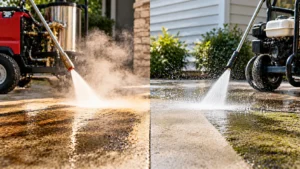
Pressure washing uses pressurized water to remove dirt, grime, mud, stains, debris, and other buildup from suitable exterior surfaces.
For commercial properties, it can be an effective cleaning method for many durable outdoor areas. The amount of pressure and cleaning technique should be appropriate for the material and its condition.
This distinction matters because commercial properties often contain several different exterior materials rather than one surface that can be cleaned the same way throughout the property.
Why Is Pressure Washing Important for Commercial Properties?
Exterior cleaning serves several practical purposes for businesses. Beyond removing visible dirt, it can support property presentation, ongoing exterior maintenance, and the upkeep of frequently used outdoor areas.
It Helps Maintain a Clean, Professional Appearance
A commercial property’s exterior may be one of the first things customers, tenants, employees, vendors, and visitors notice.
Dirty entrances, stained concrete, grime on walkways, or visible buildup on exterior surfaces can make an otherwise maintained property look neglected.
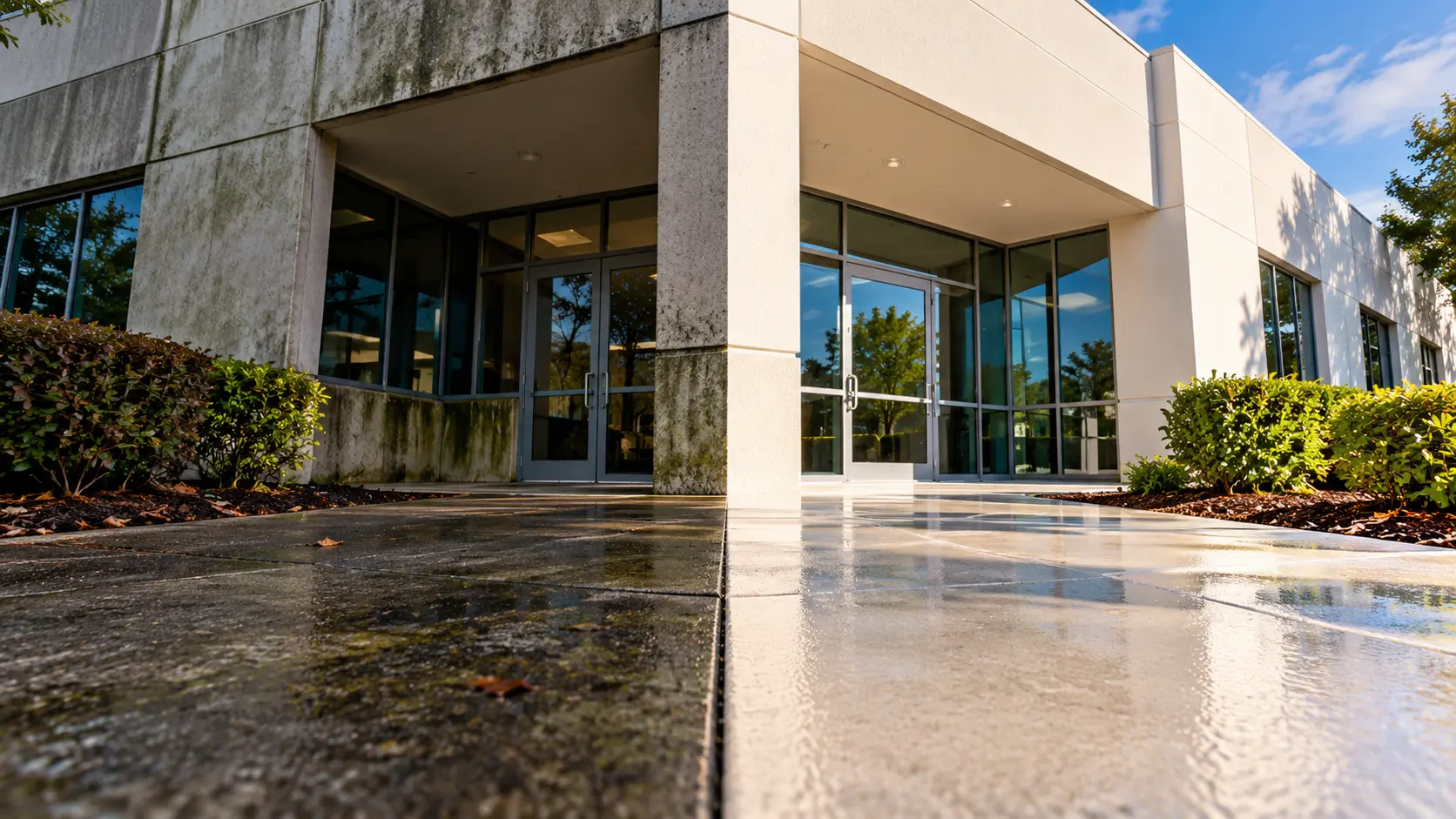
Cleaning these areas helps create a more cared-for appearance, particularly around customer-facing spaces such as entrances, sidewalks, walkways, and other highly visible areas.
For businesses, this is less about residential-style curb appeal and more about maintaining a property that reflects regular care and attention.
It Supports Ongoing Exterior Maintenance
Exterior buildup usually develops gradually.
Dirt, grime, stains, and organic growth can accumulate as surfaces remain exposed to weather, moisture, traffic, shade, vegetation, and other environmental conditions.
Addressing visible buildup as part of routine property care can help keep exterior surfaces manageable rather than waiting until they become heavily soiled.
This does not mean pressure washing prevents every type of deterioration or eliminates the need for repairs. Instead, proper exterior cleaning can complement a broader approach to maintaining commercial property.
It Helps Keep High-Traffic Exterior Areas Cleaner
Entrances, sidewalks, walkways, and other frequently used areas tend to collect dirt and debris faster than less active parts of a property.
Certain types of outdoor buildup can also make walking surfaces more slippery, particularly when wet.
Cleaning appropriate surfaces helps remove accumulated grime and organic buildup while improving the overall condition and appearance of areas used regularly by customers, employees, and visitors.
Which Areas of a Commercial Property May Benefit From Exterior Cleaning?
Cleaning needs vary from property to property, but several exterior areas commonly require attention.
Building Exteriors and Facades
Exterior walls and facades remain exposed to outdoor conditions throughout the year. Depending on the material, surrounding environment, and moisture exposure, dirt, grime, algae, and other buildup may gradually become visible.
Cleaning can improve the appearance of suitable exterior surfaces, but the method should be selected according to the material and its condition.
Sidewalks, Walkways, and Entrances
These areas experience regular foot traffic and are often among the most visible parts of a commercial property.
Dirt, weather exposure, organic growth, and everyday use can leave them looking stained or poorly maintained. Because they often form the path customers and visitors take into a business, keeping them clean can make a noticeable difference in overall property presentation.
Concrete and Parking-Related Surfaces
Concrete and other durable hard surfaces can collect dirt, grime, tire marks, stains, and outdoor buildup.
Pressure washing can be effective for many of these surfaces when the equipment, pressure, and cleaning technique are appropriate for their condition.
Not every stain can be completely removed, however, and older, damaged, or deteriorating surfaces may require additional care.
Is More Pressure Always Better?
No. More pressure does not automatically mean better cleaning.
The objective is to remove buildup effectively while using a method appropriate for the surface.
Several factors should be considered before cleaning:
- Surface material
- Existing surface condition
- Type of buildup
- Severity of the buildup
- Accessibility
- Surrounding areas
- Cleaning objective
Using excessive pressure or the wrong technique can damage certain materials. This is why professional exterior cleaning involves more than simply directing high-pressure water at a dirty surface.
The cleaning approach should match the property rather than treating every exterior area the same way.
Where Does Soft Washing Fit In?
Some exterior surfaces may require a gentler approach.
Soft washing uses lower water pressure as part of a cleaning process designed for surfaces or conditions where high pressure may not be appropriate.
Pressure washing and soft washing therefore should not be viewed as competing methods where one is always better than the other. Each has applications depending on the surface, its condition, and the type of buildup being addressed.
The goal is to select an effective cleaning method without applying unnecessary pressure to the surface.
How Do You Know When Your Commercial Property Needs Exterior Cleaning?
There is no universal cleaning schedule that applies to every commercial property.
Instead, property owners and managers can monitor the actual condition of exterior areas. Signs that cleaning may be needed include:
- Visible dirt or grime
- Algae or other organic buildup
- Stained sidewalks or walkways
- Dirty entrance areas
- Buildup on concrete
- Exterior surfaces that appear neglected
- Customer-facing areas that are becoming difficult to maintain through normal upkeep
The surrounding environment can also affect how quickly buildup develops.
Shade, vegetation, moisture exposure, foot traffic, vehicle activity, weather conditions, and surface materials can all influence a property’s cleaning needs.
Evaluating the actual condition of the property is more useful than assuming every commercial building should follow the same cleaning schedule.
Why Professional Assessment Matters
Different areas of a commercial property may require different cleaning approaches.
Before choosing a method, a professional can evaluate the surface material, its condition, the type of buildup present, accessibility, and surrounding areas that may need protection.
This helps determine whether pressure washing, soft washing, or another exterior cleaning approach is appropriate for a particular surface.
For property owners and managers, that assessment removes some of the guesswork involved in deciding how different exterior areas should be cleaned.
Elite Softwash provides commercial exterior cleaning using pressure washing and soft washing methods based on the needs of the property and the surfaces being treated.
Keep Your Commercial Property Looking Well Maintained
Pressure washing can play a useful role in commercial property care by removing exterior buildup, improving the appearance of frequently used outdoor spaces, and helping businesses maintain cleaner customer-facing areas.
The most effective approach depends on what is being cleaned rather than simply how much pressure can be applied.
If dirt, grime, stains, or organic buildup are becoming noticeable around your commercial property, Elite Softwash can evaluate the affected areas and recommend an appropriate exterior cleaning approach.