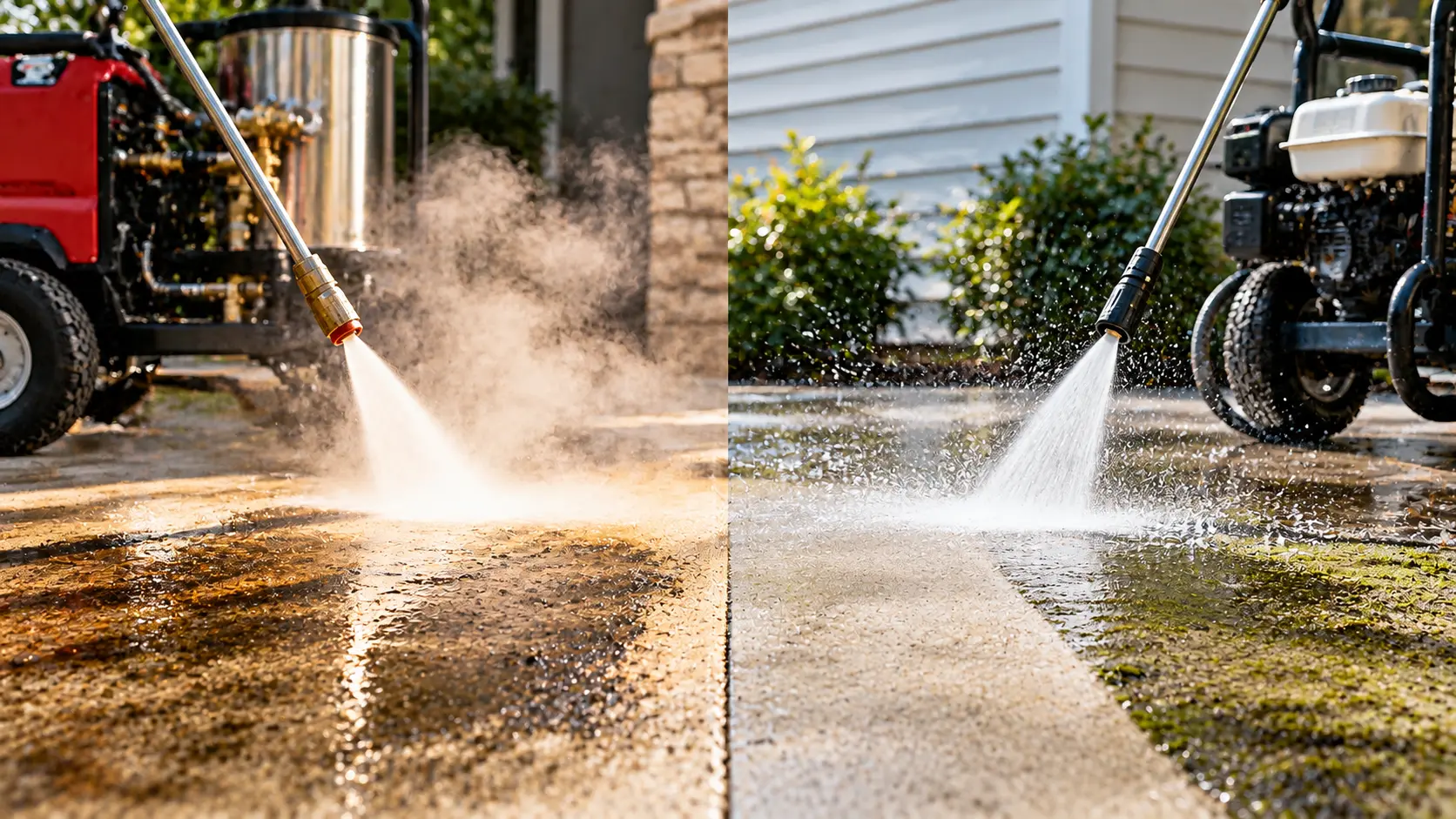
Power washing and pressure washing both use pressurized water to remove dirt and buildup from outdoor surfaces. The main difference is water temperature. Power washing uses heated water, while pressure washing typically uses unheated water.
Although the terms are often used interchangeably, the distinction matters when cleaning driveways, patios, siding, and other exterior surfaces. Heated water can help break down stubborn grease and oily residue, while unheated water works well for many routine cleaning tasks.
However, water temperature isn’t the only factor to consider. The right cleaning method also depends on the surface material, its condition, and the type of buildup being removed.
For homeowners in Winston-Salem, NC, understanding these differences can help them make informed decisions about maintaining their property’s exterior.
Power Washing vs. Pressure Washing: What’s the Main Difference?
Both methods use water pressure to loosen and remove unwanted buildup. What separates them is the use of heat.
A power washer heats the water before spraying it onto a surface. This can make it useful for cleaning certain greasy or heavily soiled areas.
A pressure washer generally uses water at its normal temperature. It relies on controlled water pressure, sometimes combined with cleaning solutions, to remove dirt and other contaminants.
Quick Comparison: Power Washing vs. Pressure Washing
| Feature | Pressure Washing | Power Washing |
| Water temperature | Unheated water | Heated water |
| Cleaning action | Pressurized water | Pressurized water combined with heat |
| Common applications | Routine exterior cleaning | Stubborn grease, oil, and heavy buildup |
| Suitable surfaces | Durable materials that tolerate the selected pressure | Durable, heat-tolerant materials |
| Main risk | Damage from excessive pressure | Damage from excessive heat or pressure |
| Best choice | Depends on the surface and cleaning requirements | Depends on the surface and cleaning requirements |
Neither method is automatically better. The most appropriate choice depends on what needs cleaning and how the surface responds to pressure, heat, and cleaning products.
What Is Pressure Washing?
Pressure washing uses a motor-driven pump to deliver water through a specialized nozzle at elevated pressure.
The concentrated stream helps remove dirt, mud, and other buildup from suitable exterior surfaces.
Common applications include cleaning concrete walkways, driveways, patios, and certain masonry surfaces.
However, effective pressure washing doesn’t mean using the highest available pressure.
Different materials require different equipment settings and techniques. For example, a concrete driveway may tolerate a cleaning approach that could damage painted wood or aging siding.
Professional pressure washing services consider the surface material, its condition, the type of contamination, and the appropriate cleaning method before work begins.
What Is Power Washing?
Power washing combines pressurized water with heat to address certain stubborn cleaning problems.
Heated water can help loosen grease, oil, and other residues that may be difficult to remove with unheated water alone.
This approach can be useful for suitable hard surfaces, including some commercial concrete areas, garage floors, and heavily soiled outdoor spaces.
However, heated water isn’t appropriate for every material.
Certain finishes, painted surfaces, and deteriorating exterior materials may be vulnerable to excessive heat or pressure.
Power washing should therefore be selected based on the cleaning requirements rather than assuming that hotter water always produces better results.
Which Cleaning Method Should You Use?
Choosing between power washing and pressure washing starts with identifying the surface and the type of buildup.
When Pressure Washing May Be Appropriate
Pressure washing may be suitable for routine cleaning of durable exterior surfaces.
For example, a concrete walkway covered with ordinary dirt or mud may respond well to properly controlled pressure washing.
It can also be useful for certain patios, driveways, and other hardscapes.
The important consideration is whether the material can tolerate the selected pressure without damage.
When Power Washing May Be Appropriate
Power washing may offer an advantage when dealing with stubborn grease or oily buildup on suitable hard surfaces.
Heated water can help loosen these substances, making removal more effective in certain situations.
Some commercial and industrial cleaning applications benefit from this approach.
However, surface compatibility remains essential. Heated water and high pressure should not be used on materials that cannot safely tolerate them.
What If Neither Method Is Appropriate?
Some exterior materials require a gentler cleaning approach.
Roof shingles, certain siding materials, painted surfaces, and aging wood may be vulnerable to aggressive cleaning.
In these situations, a lower-pressure method may be more appropriate.
This is where soft washing becomes relevant.
Where Does Soft Washing Fit In?
Soft washing is an exterior-cleaning method that uses lower water pressure together with appropriate cleaning solutions.
Instead of relying primarily on force, the process uses cleaning products to treat buildup, followed by controlled rinsing.
Soft washing is often considered for surfaces where high-pressure cleaning could cause unnecessary damage.
Depending on the material and its condition, suitable applications may include:
- Certain roof materials
- Vinyl siding
- Painted exterior surfaces
- Other pressure-sensitive materials
For example, dark streaks on asphalt-shingle roofs are often associated with algae growth. Removing this buildup requires a cleaning method appropriate for the roofing material.
Similarly, organic buildup on siding may respond to a lower-pressure cleaning approach using suitable products.
However, soft washing is not automatically safe for every surface. Cleaning solutions must be selected and applied correctly, with consideration for manufacturer recommendations, nearby vegetation, and drainage.
The goal is to use the least aggressive effective cleaning method appropriate for the material and contamination.
Which Cleaning Method Is Safest for Different Exterior Surfaces?
Exterior materials have different cleaning requirements. A method suitable for concrete may be inappropriate for wood, painted surfaces, or roofing materials.
The following table provides general guidance.
| Exterior Surface | Cleaning Considerations |
| Concrete driveways | Controlled pressure may be suitable. Heated water can help with certain greasy residues. |
| Brick and masonry | Pressure must account for material condition and mortar strength. |
| Vinyl siding | Lower-pressure cleaning is often preferable to reduce the risk of damage or water intrusion. |
| Wood decks | Excessive pressure can raise wood fibers, damage finishes, or cause splintering. |
| Wooden fences | Cleaning methods should account for wood condition, coatings, and existing damage. |
| Painted surfaces | Aggressive pressure or heat may loosen or remove paint. |
| Asphalt-shingle roofs | High-pressure washing is generally inappropriate. Follow roofing-manufacturer cleaning recommendations. |
Surface condition matters as much as material type.
For example, an older concrete walkway with deteriorating joints may require a different cleaning approach from a newer walkway in good condition.
Likewise, loose siding panels or damaged finishes may need attention before cleaning begins.
A professional assessment can help identify these concerns and determine the appropriate method.
Can Exterior Cleaning Damage Your Property?
Yes. Improper exterior cleaning can damage surfaces, even when unheated water is used.
Common problems include:
Wood damage: Excessive pressure can raise wood fibers, leave visible marks, or damage weakened areas.
Paint removal: Aggressive cleaning may strip or loosen existing finishes.
Siding damage: Incorrect spray angles can force water behind panels or affect vulnerable sections.
Masonry deterioration: High pressure may damage weakened mortar or deteriorating materials.
Roof damage: Aggressive washing can harm roofing materials and potentially reduce their service life.
Water intrusion: Improper spraying around windows, doors, joints, and openings may allow water to enter unwanted areas.
These risks highlight why equipment settings and cleaning techniques should match the property rather than applying the same approach everywhere.
For delicate materials, lower pressure and appropriate cleaning solutions may provide effective results with less risk.
Frequently Asked Questions
Is power washing better than pressure washing?
Not necessarily. Power washing can be useful for removing certain greasy or stubborn residues because it uses heated water. Pressure washing is effective for many routine exterior-cleaning applications. The better choice depends on the surface and cleaning requirements.
Are power washing and pressure washing the same thing?
The terms are commonly used interchangeably, but technically they differ in water temperature. Power washing uses heated water, while pressure washing generally uses unheated water.
When should you avoid power washing?
Power washing may be inappropriate for heat-sensitive, fragile, painted, or deteriorating surfaces. Roofing materials and certain exterior finishes may require alternative cleaning methods.
Is pressure washing safe for house siding?
It depends on the siding material, condition, equipment settings, and technique. Excessive pressure can damage siding or force water behind panels. Lower-pressure cleaning may be more appropriate for certain materials.
Should you pressure wash your home yourself or hire a professional?
Some straightforward cleaning tasks may be manageable with suitable equipment and knowledge. However, delicate surfaces, significant buildup, difficult access, and uncertain material conditions can benefit from professional assessment.
Get the Right Exterior Cleaning Method for Your Property
Power washing, pressure washing, and soft washing serve different cleaning needs.
Choosing the appropriate method helps remove unwanted buildup while reducing the risk of unnecessary surface damage.
Elite Softwash provides exterior-cleaning services for property owners in Winston-Salem, NC, and surrounding areas.
Whether you’re dealing with dirty walkways, exterior grime, or surfaces that need a gentler approach, professional guidance can help determine the appropriate cleaning method.